AIA G702 and G703 explained
2026-09-047 min read
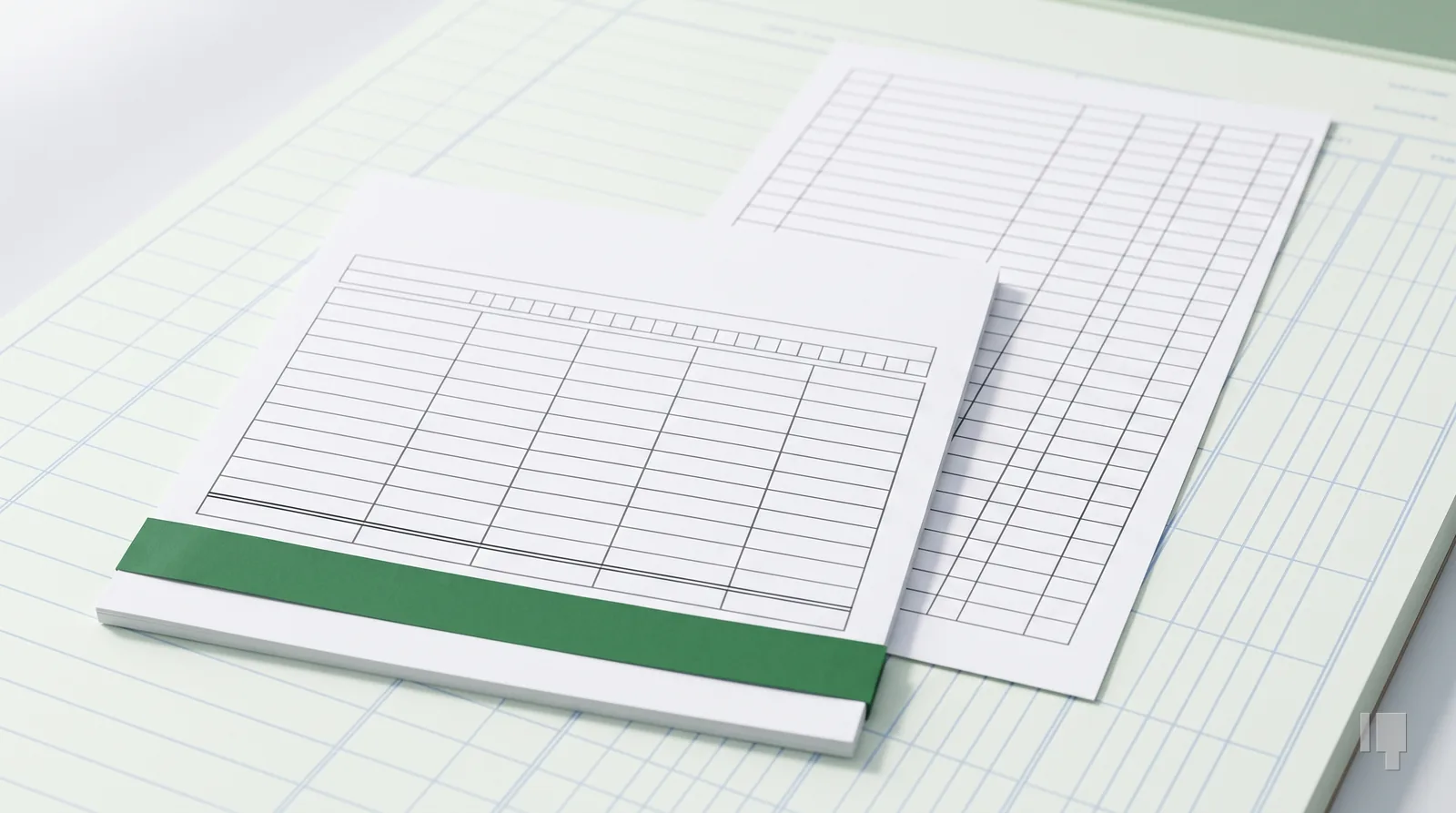
The application for payment is a short column of summary lines, and each derives from the ones above it. Get line 5 wrong and every figure below it is wrong too. Here is the whole chain.
Two documents, one arithmetic
The G702 is the summary — the certificate the architect or owner signs. The G703 is the continuation sheet behind it, where the schedule of values lives line by line. The pair is the industry default because the summary derives entirely from the sheet, so a reviewer can check the whole application by checking one column.
The forms themselves are published by the American Institute of Architects and licensed; this page describes how the arithmetic runs rather than reproducing the document. Build the same summary lines in the browser with the pay application generator.
The summary lines, and what feeds each
| Line | Content | Comes from |
|---|---|---|
| 1 | Original contract sum | The subcontract |
| 2 | Net change by change orders | Approved change orders only |
| 3 | Contract sum to date | Line 1 + line 2 |
| 4 | Total completed and stored to date | The continuation sheet total |
| 5 | Retainage | A percentage of line 4, not of line 3 |
| 6 | Total earned less retainage | Line 4 − line 5 |
| 7 | Less previous certificates | Prior applications certified |
| 8 | Current payment due | Line 6 − line 7 |
| 9 | Balance to finish plus retainage | Line 3 − line 4, plus line 5 |
Line 5 is the one people get wrong. Retainage is calculated on completed and stored to date, which is why the withheld balance grows through the job rather than appearing at the end.
The continuation sheet
The G703 columns run: item number, description of work, scheduled value, work completed from previous applications, work completed this period, materials presently stored, total completed and stored, percent, balance to finish, and retainage. The scheduled-value column has to total the contract sum exactly — that is the first thing a reviewer checks and the most common reason an application is returned unread.
Build the sheet before you build the summary. The schedule of values builder checks the total against the contract sum and flags the variance.
Stored materials
Materials presently stored is a real column with real conditions — suitably stored, insured, and documented. An unsupported stored-materials figure inflates line 4 and delays the whole application.
Why applications come back
- The continuation sheet does not total the contract sum.
- Retainage applied to the contract sum instead of completed and stored.
- Change orders folded into existing lines instead of added as new ones.
- Stored materials with no invoice or insurance certificate attached.
- The conditional waiver missing from the package.
On federal construction work the clock is worth knowing while you fix any of these: a progress payment is due 14 days after the designated billing office receives a proper payment request, and an improper invoice must be returned within 7 days with reasons. A silent office past those dates is a fact you can use.
Sources
- FAR 52.232-27(a)
On a federal construction contract, a progress payment is due 14 days after the designated billing office receives a proper payment request; an improper invoice must be returned within 7 days with reasons.
Read 2026-10-18
- 31 U.S.C. § 3903(a)(6)
On a federal construction contract, interest is owed on retained amounts approved for release that are not paid by the date the contract specifies or, if it specifies none, by the 30th day after final acceptance.
Read 2026-10-18
- Tex. Prop. Code § 53.101
Texas requires the owner to reserve 10 percent of the contract price (or 10 percent of the value of the work) during the job and for 30 days after completion — statutory retainage.
Read 2026-10-18