Construction payment terms that hold up
2026-09-046 min read

Five terms in the payment article decide whether a profitable job is also a survivable one. Read them together, compute the real gap, and strike the six clauses below at award.
The five terms that set your cash position
A subcontract's payment article is short and it decides everything. Five terms do the work: the billing cycle, the net terms, the retainage rate and release, the change-order pricing mechanism, and the conditionality of payment on the owner. Everything else is decoration.
Read them together rather than separately. A 30-day net term looks fine until you notice the cycle cuts off on the 25th and certification takes ten days — which makes the real gap closer to seventy.
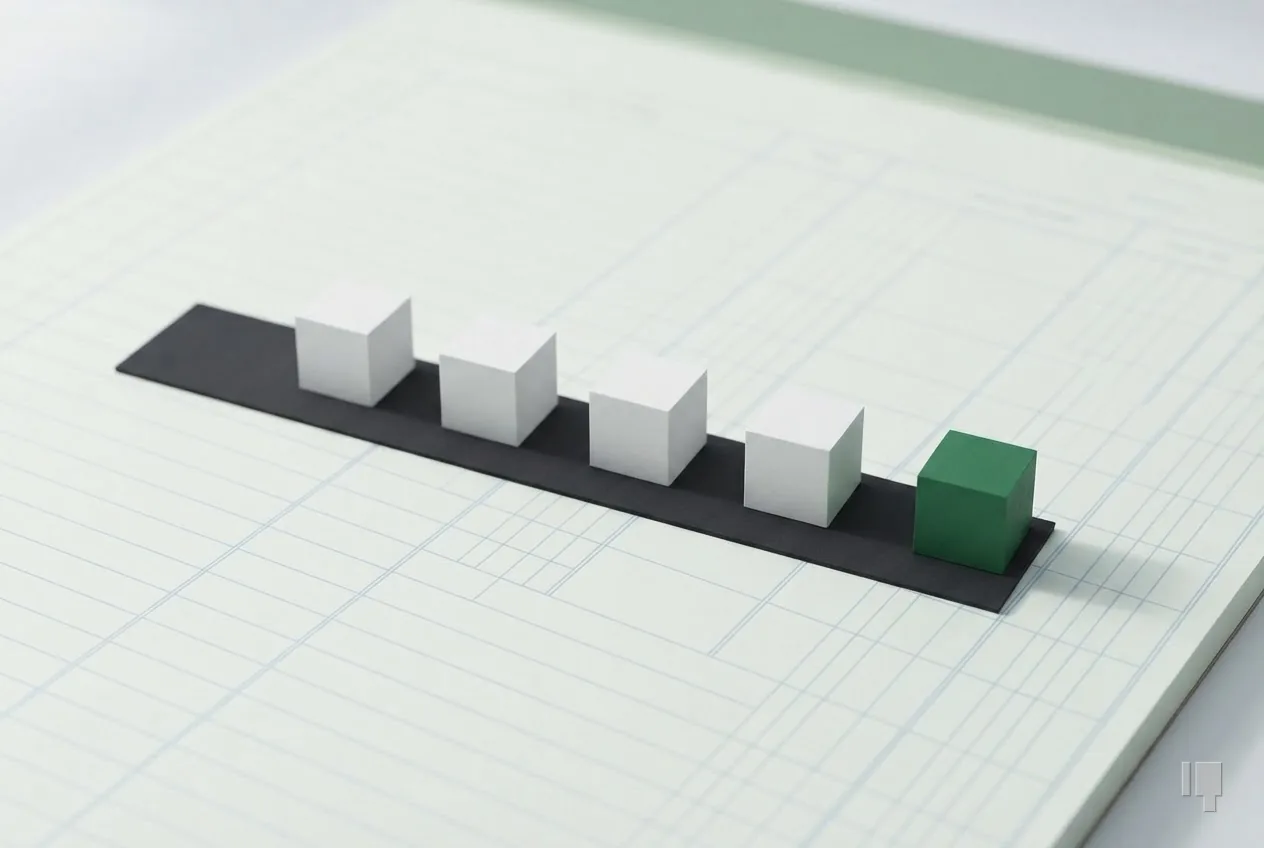
Cycle plus terms is the real number
| Stage | Typical | Question to ask |
|---|---|---|
| Work performed | Through the 25th | When is the cut-off? |
| Application submitted | By the 25th | Is late = next cycle? |
| Certification | 5-10 days | Who certifies, and by when? |
| Net terms | 30 days from certification | From submission or certification? |
| Actual gap | 50-70 days | Compute it before you sign |
“Net 30 from approval” and “net 30 from submission” are not close to the same clause. Ask which, in writing, and put the answer in the schedule you use to plan payroll.
Clauses worth striking
- Pay-if-paid conditionality — see the separate guide.
- Any waiver of statutory lien or bond rights.
- Retainage with no stated release date.
- Unilateral backcharge rights with no notice or cure period.
- Change orders priced only after the work is directed.
- “Time is of the essence” running one way only.
On federal work, statute already supplies dates the contract cannot simply ignore: a progress payment is due 14 days after a proper request, and retained amounts are released by the date the contract names or the 30th day after final acceptance.
Change orders are a payment term
Most cash-flow damage on a healthy job comes from change-order work performed before it is priced. The mechanism matters more than the markup: a clause that lets you bill directed work at agreed rates while pricing is finalised protects you; one that requires full execution before any billing does not.
Whatever the clause says, put approved change orders into the schedule of values as their own lines rather than folding them into existing ones. The schedule of values builder keeps the audit trail, and the pay application generator carries them into line 2.
Sources
- FAR 52.232-27(a)
On a federal construction contract, a progress payment is due 14 days after the designated billing office receives a proper payment request; an improper invoice must be returned within 7 days with reasons.
Read 2026-10-18
- 31 U.S.C. § 3903(a)(6)
On a federal construction contract, interest is owed on retained amounts approved for release that are not paid by the date the contract specifies or, if it specifies none, by the 30th day after final acceptance.
Read 2026-10-18
- Tex. Prop. Code § 53.101
Texas requires the owner to reserve 10 percent of the contract price (or 10 percent of the value of the work) during the job and for 30 days after completion — statutory retainage.
Read 2026-10-18
Related
- Pay-When-Paid vs Pay-If-Paid2026-09-045 min readThe conditionality term.
- What Is Retainage?2026-09-047 min readThe retainage term.
- Progress Billing2026-09-046 min readThe cycle in practice.
- The Prompt Payment Act2026-09-047 min readStatutory dates over contract dates.
- Construction Invoice TemplateNet terms with the due date worked.
- Notice of Delay LetterKeep a delay claim alive in writing.